
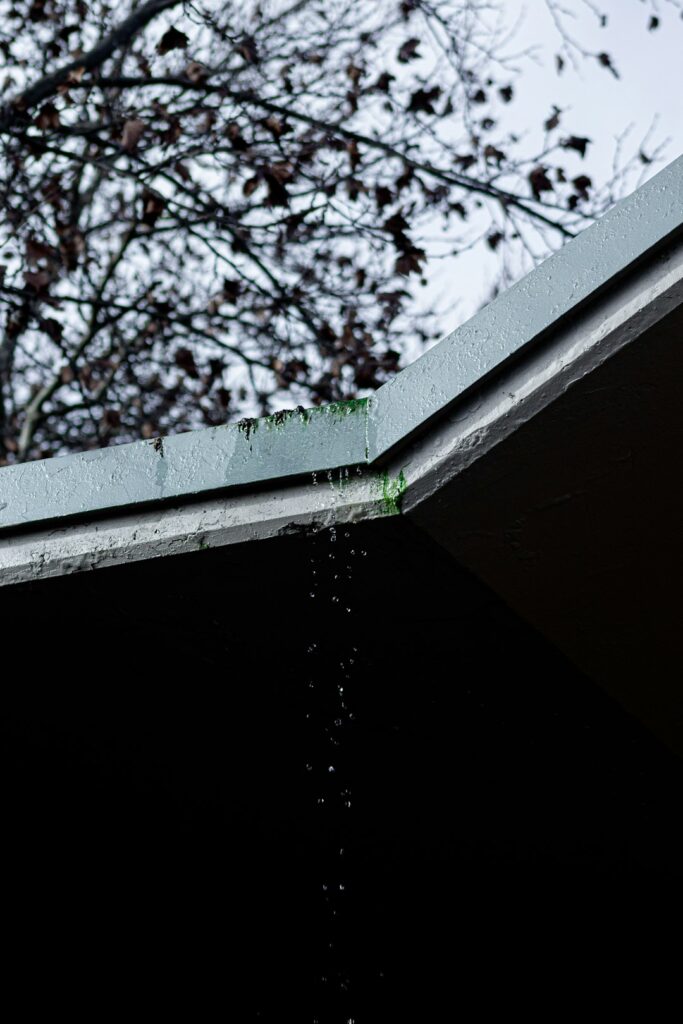
Good roof drainage moves rain, melting snow, and ice safely from the roof to a location where water will not damage the roof, walls, foundation, landscaping, or neighboring property. In Perry, NY, drainage systems need to handle wet spring conditions, heavy summer storms, freeze-thaw cycles, and winter snow and ice.
A roof can be in generally good condition and still develop problems if water is not directed properly. Gutters, downspouts, roof valleys, flashing, grading, and discharge areas all work together as one drainage system.
What does a complete roof drainage system include?
A complete system has more than gutters. It includes every surface and component that collects, controls, and carries water away from the building.
Typical parts include:
- Roof slopes that direct water toward eaves, valleys, or drains
- Gutters that collect runoff along roof edges
- Downspouts that carry water from the gutters toward the ground
- Elbows and extensions that direct discharge away from the foundation
- Flashing around chimneys, walls, dormers, and roof penetrations
- Drains or scuppers on low-slope roof sections
- Soil grading and surface drainage around the building
The system should move water continuously without overflowing, backing up, leaking behind the gutter, or releasing concentrated flow next to the foundation.
How should gutters be positioned?
Gutters should be installed with a consistent slope toward their outlets. They should also sit securely beneath the roof edge so they collect runoff without interfering with shingles, underlayment, fascia, or soffit ventilation.
Gutters that are too low may allow water to run behind them. Gutters that are tilted incorrectly may hold standing water, collect sediment, and freeze during cold weather. Long gutter runs may need more than one outlet so water does not travel excessive distances before entering a downspout.
The roof edge should also be checked for signs that water is bypassing the gutter. Dark staining on fascia boards, peeling paint, damp soffits, and rotted trim can indicate that the gutter position, roof edge, or flashing needs attention.
Where should downspouts discharge water?
Downspouts should release water far enough away from the foundation to prevent repeated saturation of the soil beside the house. A short outlet that ends directly beside the wall can create basement moisture, settlement, erosion, or damage to foundation coatings.
The discharge point should:
- Direct water away from foundation walls
- Avoid washing soil from beneath walkways or steps
- Avoid creating ice where people walk or vehicles are parked
- Avoid sending concentrated runoff onto a neighboring property
- Connect with an appropriate surface drain or underground system where conditions require it
Downspout extensions need regular inspection because they can become buried, crushed, disconnected, or blocked by leaves and ice. An extension that has shifted back toward the house may quietly create a drainage problem even when the gutters themselves appear clean.
How do roof valleys affect drainage?
Roof valleys concentrate water from two sloping roof sections. Because a large volume of runoff may pass through a valley, this area requires careful attention to flashing, underlayment, shingle installation, and debris removal.
Open valleys can collect leaves, twigs, and ice. Closed valleys may develop problems if shingles are damaged, improperly aligned, or installed over weak flashing. Water staining in an attic or on a ceiling below a valley can appear well after the original leak began.
After major storms, inspect valley areas from the ground for displaced materials, accumulated debris, or visible water overflow. Walking on a roof can damage shingles and create fall hazards, especially when the surface is wet, icy, or steep.
What maintenance is needed before winter?
Fall is a useful time to check roof drainage because leaves and seasonal debris can block gutters and downspouts before snow arrives. However, cleaning should be performed safely from stable equipment, and roof access should be avoided when conditions are slippery.
Before winter, check for:
- Gutter sections pulling away from the fascia
- Loose or missing downspout straps
- Blocked outlets and underground drain connections
- Cracks or open seams in gutters
- Ice-prone discharge locations
- Branches that may drop debris onto the roof
- Sagging sections where water remains after rainfall
Snow and ice can add substantial weight to drainage components. Ice dams may also form when heat escapes unevenly through the roof and melts snow above colder eaves. A blocked gutter can make the problem worse by preventing meltwater from leaving the roof edge.
Does gutter protection eliminate maintenance?
No. Covers or screens may reduce the amount of leaves entering a gutter, but they do not eliminate inspections. Small debris can collect on top of the protection, sediment can pass through openings, and ice can still interfere with drainage.

The roof edge, gutter slope, fasteners, seams, and downspouts still need periodic checking. In areas with mature trees, maintenance may be needed more often than once a year.
How should water be managed around the foundation?
Roof drainage works best when it is combined with positive surface grading. Soil near the house should generally slope away from the foundation rather than forming a low area where water can collect.
Look for:
- Depressions beneath downspouts
- Mulch or soil touching siding
- Water pooling beside basement walls
- Erosion channels near corners
- Cracked pavement directing water toward the house
- Window wells filling after rain
Water should not be trapped against the foundation by landscaping borders, compacted soil, or poorly placed downspout outlets. Changes to grading should be made carefully so runoff is not redirected toward another structure or property.
What are common roof drainage mistakes?
Several drainage problems result from small installation or maintenance errors:
- Ending downspouts beside the foundation
- Allowing gutters to sag between fasteners
- Relying on sealant instead of correcting poor gutter alignment
- Ignoring roof valleys during inspections
- Blocking drainage paths with roofing debris
- Covering a low area without addressing standing water
- Discharging water onto walkways where it can freeze
- Assuming a dry basement means the drainage system is working properly
A roof may drain adequately during light rain but overflow during a cloudburst. Testing should include observation during moderate or heavy rainfall when possible.
When does drainage work require special care?
Some conditions should not be handled casually. Roofs that are steep, fragile, icy, heavily snow-covered, or difficult to access create fall risks. Electrical lines, skylights, loose roofing materials, and unstable ladders add further hazards.
Drainage changes may also affect permits, building-code requirements, or neighboring properties, particularly when installing new roof drains, underground discharge piping, or major grading changes. New York’s residential construction requirements include provisions related to roof drainage and the handling of runoff.
Warning signs that deserve prompt attention include active ceiling leaks, water entering around walls or chimneys, gutters separating from the building, repeated basement seepage, and roof sections holding standing water.
A sound drainage system is quiet, continuous, and predictable: water enters at the roof edge or drain, travels through secure channels, and leaves the building without collecting against the structure. Regular observation after heavy rain and before winter can reveal many problems before they become interior damage.
